
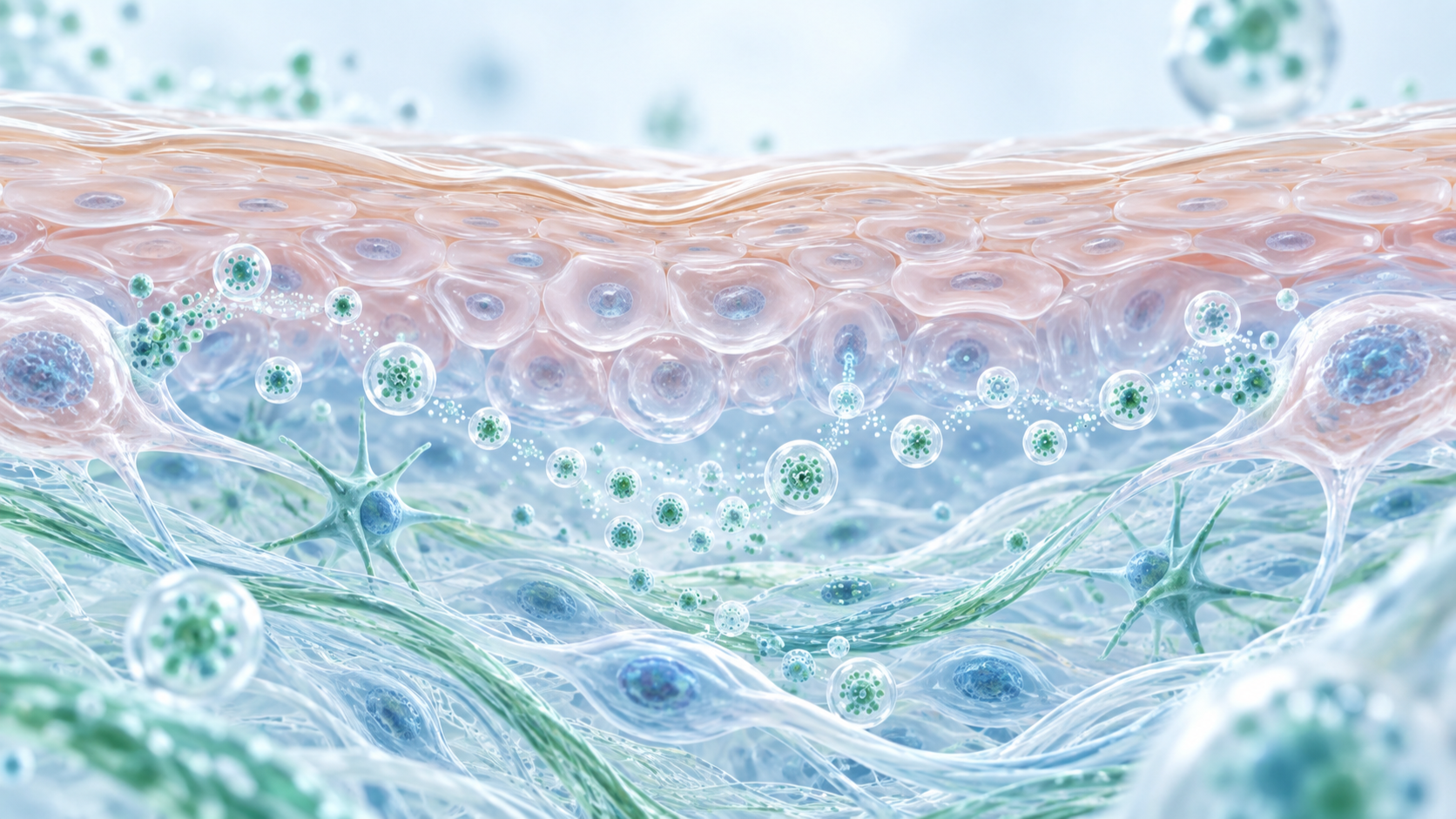
Exosomes in Dermatology: Emerging Roles in Skin Health and Disease
Authors: Salman Bin Dayel and Ramadan S. Hussein
Journal: Pharmaceutics
Publication year: 2025
Volume and issue: Volume 17, Issue 5, Article 600
DOI: 10.3390/pharmaceutics17050600
Article type: Review article
Introduction
Exosomes are very small extracellular vesicles secreted by many different types of cells. They play an important role in intercellular communication. Initially regarded mainly as a means of disposing of cellular waste, exosomes are now understood to carry a wide range of bioactive molecules capable of altering the behavior of recipient cells.
Exosomes generally range from 30 to 150 nanometers in size and may contain proteins, lipids, DNA, RNA, and other biologically active molecules. Their molecular composition depends on the cell from which they originate and on the physiological or pathological condition of that cell.
This review examines exosome formation and function, their role in skin homeostasis and tissue repair, their involvement in skin diseases, and their potential diagnostic and therapeutic applications in dermatology.
Exosome Biogenesis and Function
Exosomes are formed within the endosomal system. Their development involves the formation of early endosomes, their maturation into multivesicular bodies, and the subsequent release of vesicles into the extracellular space.
Once released, exosomes may bind to target cells, enter them, or fuse with their cell membranes. They can then transfer their biological cargo to recipient cells and modify signaling pathways, gene expression, and cellular behavior.
Common markers used in exosome identification include CD9, CD63, CD81, Alix, and TSG101.
The Role of Exosomes in Skin Health
A central focus of the article is the role of exosomes in maintaining skin homeostasis. Communication among different skin cell populations is essential for normal tissue function, injury repair, and regulation of immune responses.
Through the transfer of bioactive molecules, exosomes may facilitate communication between skin cells and immune cells. They may influence cell proliferation and migration, inflammation, extracellular matrix remodeling, and skin barrier function.
Wound Healing and Skin Regeneration
One of the most important potential applications of exosomes in dermatology is wound healing and tissue regeneration.
The evidence reviewed in the article suggests that exosomes may participate in different stages of wound repair. For this reason, they have attracted attention as potential tools in regenerative medicine.
Their reported functions include:
- Promoting cellular migration and proliferation
- Regulating inflammatory responses
- Stimulating angiogenesis
- Supporting extracellular matrix remodeling
- Supporting the regeneration of damaged tissue
Exosomes in Skin Diseases
The article examines both the physiological functions of exosomes and their potential involvement in different skin disorders.
Psoriasis
Exosomes may participate in communication between skin and immune cells and may contribute to the regulation of inflammatory pathways.
Eczema and Inflammatory Skin Diseases
Changes in intercellular communication and exosome-mediated signaling may be associated with inflammatory processes in the skin.
Acne
Because of their involvement in cellular communication and inflammatory regulation, exosomes have become a potential area of research in acne.
Skin Cancer
Exosomal cargo may contribute to communication between tumor cells and surrounding cells. Exosomes are therefore being investigated both to improve understanding of disease mechanisms and as potential sources of biomarkers.
Exosomes as Biomarkers
An important future area of research involves the use of exosomes in diagnosing and monitoring skin diseases.
Exosomes contain proteins, RNAs, and other molecules that may reflect the condition of their cells of origin. Analysis of their cargo may therefore provide information about disease status.
For this reason, exosomes are being explored as potential sources of diagnostic and prognostic biomarkers. In the future, they may contribute to disease detection, monitoring of disease progression, and assessment of treatment response.
Therapeutic Potential of Exosomes
Another important property of exosomes is their ability to transfer biologically active molecules to target cells. This has led researchers to investigate them as potential systems for targeted therapeutic delivery.
In this approach, exosomes may act as natural carriers of RNA, proteins, or other bioactive agents. The goal is to improve selective delivery to target cells and regulate disease-related cellular pathways.
Common Skin Disorders and Contributing Factors
ConditionDescriptionCauses and risk factorsAcne | Comedones, papules, pustules, nodules, and cysts, commonly affecting the face, chest, and back | Increased sebum, follicular obstruction, C. acnes growth, and inflammation
Eczema or dermatitis | Skin inflammation accompanied by redness, itching, and irritation | Genetic susceptibility, immune dysfunction, allergens, and environmental irritants
Psoriasis | Chronic autoimmune disease characterized by rapid accumulation of skin cells, plaques, and scaling | Genetic susceptibility, immune dysfunction, stress, infection, and other triggers
Hair disorders | Alopecia areata, hirsutism, and male-pattern hair loss | Autoimmune, hormonal, and genetic factors
Nail disorders | Nail discoloration, thickening, and deformation | Fungal infection, trauma, psoriasis, and systemic disease
Contact dermatitis | Inflammation, redness, and itching following contact with an irritant or allergen | Chemicals, detergents, nickel, latex, and similar allergens
Pruritus | Persistent itching caused by a skin or systemic disorder | Dermatitis, kidney disease, liver disorders, and neuropathic causes
The potential relevance of exosomes in dermatology is not limited to skin rejuvenation. It extends to inflammatory diseases, hair and nail disorders, and other cutaneous symptoms.
Reported Exosome-Based Products and Applications
ProductCompanyReported sourceReported applicationReported benefitPlated Intense Serum | Rion Aesthetics | Platelet-derived | Anti-aging care and skin rejuvenation | Reduced redness and improved skin tone and texture
Renewosome Exosome Serums | (plated) Skin Science | Platelet-derived | Skin and hair rejuvenation | Support for a younger appearance and skin and hair health
ELEVAI enfinity | ELEVAI Skincare | Not specified in the article | Professional at-home skincare | Combination of exosomes with active ingredients
EXO-SKIN Exosome Serum | Dp Dermaceuticals | Wharton’s jelly MSC-derived | Wound repair and rejuvenation | Support for wound closure and scar reduction
Cellese Exosome Products | Cellese | Not specified in the article | Skin rejuvenation | Support for skin health and longevity
Licorice Exosome Brightening Treatment Orbs | Snow Fox Skincare | Licorice root-derived vesicles | Brightening and hyperpigmentation care | Support for reducing discoloration and improving skin tone
CICA Exosome Replenishing Treatment Orbs | Snow Fox Skincare | Centella asiatica-derived | Post-treatment recovery and hydration | Reduced redness and improved hydration
The commercial availability of these products demonstrates growing market interest in exosome technology. However, the existence of a commercial product does not by itself establish clinical efficacy or regulatory approval for every reported application.
Comparison of Exosome Delivery with Conventional Methods
FeatureExosome deliveryViral deliveryNon-viral deliveryBiocompatibility | Potentially high because of cellular origin and lower toxicity | Moderate; viral components may cause toxicity | Moderate to low; chemical materials may cause toxicity
Immunogenicity | Generally described as low | Higher potential for immune activation and inflammation | Low to moderate, depending on the delivery system
Targeting | Potential natural cell-targeting capability | Dependent on vector engineering | Variable and dependent on chemical modification
Genetic cargo capacity | Moderate and limited by size | High | High, although formulation may be complex
Genomic integration risk | Described as absent in the article’s comparison | Some vectors may present a risk of integration | Generally absent, with typically transient expression
Circulatory stability | Potentially high | Moderate | Low to moderate
Production scalability | Challenging and dependent on optimized isolation | Established production methods are available | Generally scalable
Regulatory complexity | Product- and jurisdiction-dependent | High and subject to strict requirements | Moderate and dependent on formulation and safety
This comparison illustrates the potential advantages of exosomes for biological cargo delivery while also highlighting important challenges in production, purification, and standardization.
Patent Landscape for Exosome-Based Products
Patent numberTitleApplicant or inventorMain focusReported innovationUS20200331271A1 | Compositions and Methods for Treating Skin Aging | Kimera Labs Inc. | Skin aging and regeneration | Exosome formulations intended to support collagen synthesis and reduce wrinkles
US10576136B2 | Exosome-Based Drug Delivery System | Codiak Biosciences Inc. | Targeted drug delivery | Engineering exosomes for delivery of therapeutic cargo
US11324768B2 | Methods for Enhancing Wound Healing | RoosterBio Inc. | Wound healing and tissue regeneration | Exosome compositions intended to accelerate repair
EP3567892A1 | Exosome-Based Cosmetic Composition | Medytox Inc. | Skincare and dermatology | Topical formulations for hydration and elasticity
WO2019229865A1 | Method for Large-Scale Exosome Production | Exopharm Ltd. | Isolation and purification | Scalable production methods intended to provide high purity
CN110857767A | Exosome-Based Anti-Inflammatory Therapy | Ever Supreme Bio Technology | Skin inflammation | Proposed exosome applications for inflammatory conditions
JP2020035462A1 | Nanovesicle Composition for Skin Rejuvenation | ExoCoBio Inc. | Skin aging and pigmentation | Topical formulations for rejuvenation and brightening
US20210263159A1 | Exosome Therapy for Hair Growth Stimulation | Direct Biologics LLC | Hair regeneration | Exosome compositions intended to stimulate follicles and hair growth
Patent activity has emerged in areas including skin aging, wound repair, drug delivery, production and purification, skin inflammation, pigmentation, and hair growth. The filing or granting of a patent does not by itself demonstrate clinical efficacy or constitute regulatory authorization.
Future Research Directions
Future directionImportance and objectiveStandardization of isolation and identification | Developing standardized protocols to support consistent quality and safety
Optimization of exosome cargo loading | Improving the loading of RNA, nucleic acids, and therapeutic proteins
Personalized treatments | Adapting treatment to genetic characteristics, skin type, and skin disease
Combination treatments | Evaluating potential synergy with lasers, microneedling, or conventional therapies
Long-term safety studies | Assessing repeated treatment, especially in chronic diseases and long-term aesthetic applications
Regulatory frameworks | Establishing clear pathways for assessing quality, safety, and efficacy
Standardization, quality control, targeted cargo loading, personalization, combination treatment, long-term safety, and regulatory frameworks represent some of the most important gaps between experimental research and routine clinical use.
Current Challenges
Despite encouraging findings, the authors emphasize that widespread clinical use of exosomes continues to face substantial challenges.
One major issue is the complexity and heterogeneity of exosomes. Their cellular source, production conditions, molecular cargo, and isolation method may all affect the characteristics of the final product.
Moving this technology from research into clinical practice will require standardization of production, identification, purification, product characterization, safety assessment, and efficacy evaluation.
Many current findings are still based on laboratory research, preclinical studies, or early clinical investigations. More well-designed clinical trials are required to determine the actual role of exosomes in treating skin diseases.
Future Outlook
The authors describe exosomes as an emerging and important area of dermatology research. Their involvement in intercellular communication, their ability to transfer bioactive molecules, and their potential use as biomarkers or therapeutic carriers provide multiple avenues for future development.
Standardized production and identification methods, appropriately designed clinical studies, and a better understanding of their mechanisms of action may enable more targeted use of exosome technology in the diagnosis and treatment of skin diseases.
Conclusion
Exosomes are more than simple extracellular vesicles. They may act as important mediators of intercellular communication within the skin.
Their roles in skin homeostasis, wound healing, tissue regeneration, and immune regulation, together with their potential involvement in psoriasis, eczema, acne, and skin cancer, have generated increasing interest in dermatology research.
Their potential use as diagnostic biomarkers and targeted therapeutic carriers may also create new opportunities for personalized medicine.
Nevertheless, widespread clinical use of exosomes still requires further research, standardization, rigorous assessment of safety and efficacy, and reliable clinical trials. Overall, exosomes represent an emerging technology with considerable potential for the future development of skin diagnosis, treatment, and regeneration.